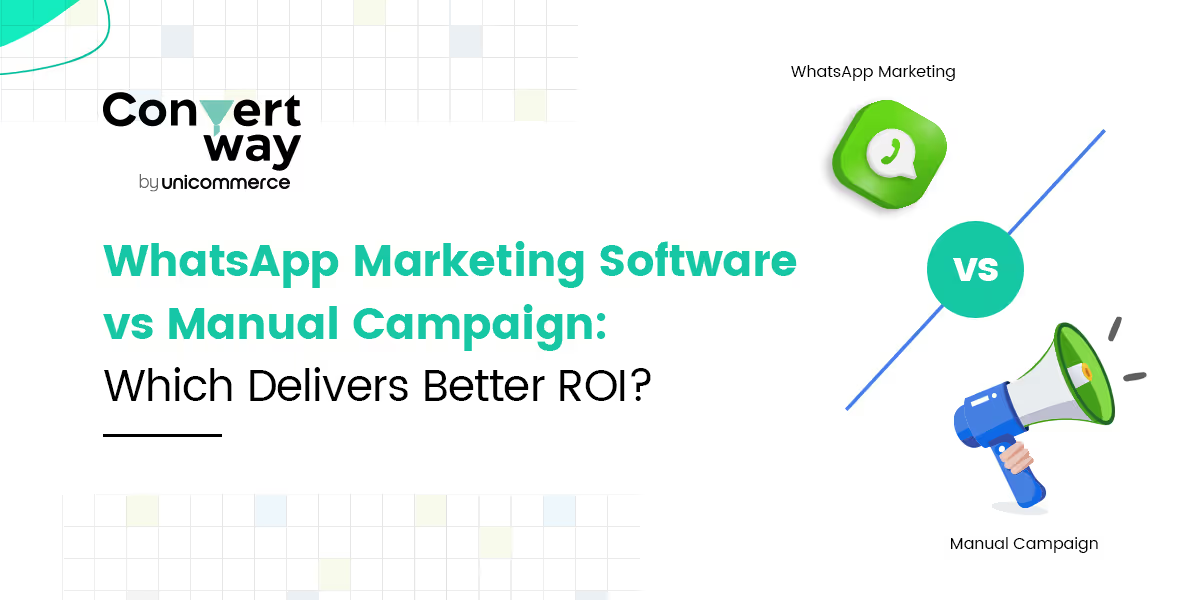
As eCommerce brands scale, WhatsApp has quickly become a high-ROI channel for customer engagement. But many sellers still debate whether to rely on WhatsApp marketing software for automated workflows or continue with manual, one-to-one campaigns. Both approaches have their place, but their impact on scalability, customer experience, and overall ROI is very different.
In this guide, we break down how each method works and which one drives stronger long-term value for your business.
Review Your Business Consideration
Before choosing a path, review your business considerations, like your goal, expectations, and annual ROI.
B2B businesses usually require a higher level of personalization because their sales cycles are longer and relationships matter more.
B2C brands, on the other hand, lean heavily on automation for things like cart reminders, product recommendations, and post-purchase follow-ups helping them engage customers at scale.
Young startups often begin with manual messaging to maintain authenticity and stay close to their audience, and then gradually adopt automation as they grow.
Large enterprises depend on automation from day one to ensure consistent communication across huge audiences and multiple channels.
1. Niche campaigns that require precise targeting
When you need full control over messaging, tone, and timing, especially for small, high-value customer segments.
2. B2B sales where relationships matter more than speed
Personal, human-led conversations help build trust, clarify complex offerings, and nurture long-term partnerships.
3. High-ticket or premium product sales
Customers expect direct interaction, detailed explanations, and a more consultative approach before purchasing.
4. Early-stage startups building community and authenticity
Founders or small teams often prefer manual engagement to stay close to their first set of customers.
5. Influencer-led or referral-driven campaigns
Manual follow-ups feel more personal and help nurture warm leads from trusted sources.
6. Sensitive or case-by-case customer issues
Situations like product defects, escalations, or large order queries often require a real person to resolve effectively.
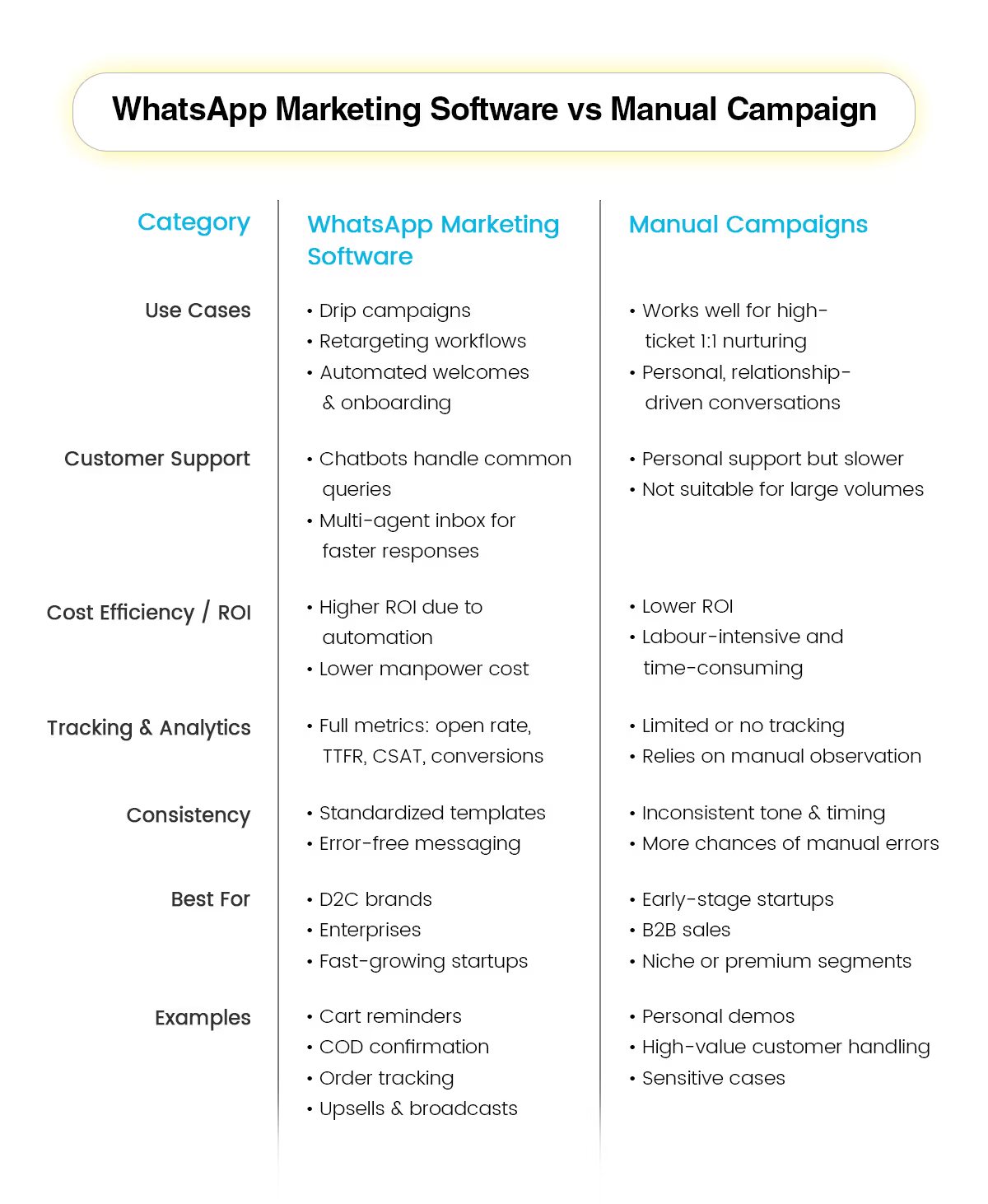
Both manual messaging and automated workflows can work, it depends on what type of interaction you’re handling.
WhatsApp marketing software is best for:
1. High-volume campaigns
2. Repetitive messages
3. Drip journeys and reminders
4. Order updates and broadcasts
5. Anything that needs speed, scale, and policy compliance
6. Manual WhatsApp messaging works better when:
7. The conversation is complex
8. The customer needs empathy
9. You’re handling high-value or sensitive interactions
10. Personal judgment is required
A marketing automation tool acts as a single source of truth for all customer interactions. It unifies data from multiple channels so you can:
This ensures consistency in communication and smarter targeting.
You can monitor where each prospect sits in the sales and marketing funnel.
This includes:
It helps prioritize high-intent leads and improve funnel efficiency.
A strong automation tool lets you refine marketing strategies using real customer data.
You can identify:
What content works
These insights make your execution sharper and more targeted.
Integrating your CRM, sales tools, and support systems ensures everyone works on the same data.
This leads to:
A connected ecosystem = better decision-making.
Automation eliminates manual effort by enabling you to create intelligent workflows like:
These workflows ensure timely, personalized communication.
The tool monitors how users interact with your:
This helps you personalize content based on real-time behavior, increasing engagement and conversions.
Modern automation tools use AI to help you:
This ensures campaigns are smarter and more impactful.
With clear insights, behavior analytics, and performance metrics, marketers can make better decisions about:
It moves your marketing from guesswork to precision.
Manual WhatsApp outreach still works for sensitive, high-value, or relationship-driven conversations, but for anything that needs speed, scale, or consistency, automation clearly delivers better ROI. With tools like Convertway, brands can run smart, data-driven WhatsApp, Email, SMS, and RCS campaigns without manual effort. The right approach is a balance: automate the repetitive tasks and keep manual interactions for moments that truly need a human touch.
1. What is WhatsApp marketing software, and how does it improve ROI?
WhatsApp marketing software automates customer communication through workflows, broadcasts, cart reminders, and order updates. It reduces manual effort, increases engagement, and delivers higher ROI compared to manual campaigns, especially for D2C and eCommerce brands.
2. What’s the difference between WhatsApp marketing tools and manual messaging?
WhatsApp marketing tools offer automation, tracking, analytics, and consistency at scale. Manual messaging is suitable for personalised, high-value conversations but cannot handle large volumes efficiently.
3. When should brands use WhatsApp marketing software instead of manual campaigns?
Use WhatsApp marketing software for repetitive tasks like order updates, COD verification, abandoned cart reminders, and drip workflows. Manual campaigns are better for complex, sensitive, or relationship-driven interactions.
4. Are WhatsApp marketing tools suitable for B2B and B2C businesses?
Yes. B2C brands rely heavily on automation for scale, while B2B teams use WhatsApp marketing tools to support lead nurturing, demos, and follow-ups with structured workflows.
5. Which WhatsApp marketing tools are best for eCommerce brands?
Tools like Convertway, HubSpot, ActiveCampaign, Klaviyo, Omnisend, and Customer.io help automate WhatsApp, email, SMS, and RCS journeys enabling higher conversions and better customer lifecycle management.
6. Can manual WhatsApp campaigns still deliver good results?
Yes. Manual campaigns work well for premium product sales, B2B conversations, influencer-driven leads, and early-stage startups that prefer personalised engagement over automation.