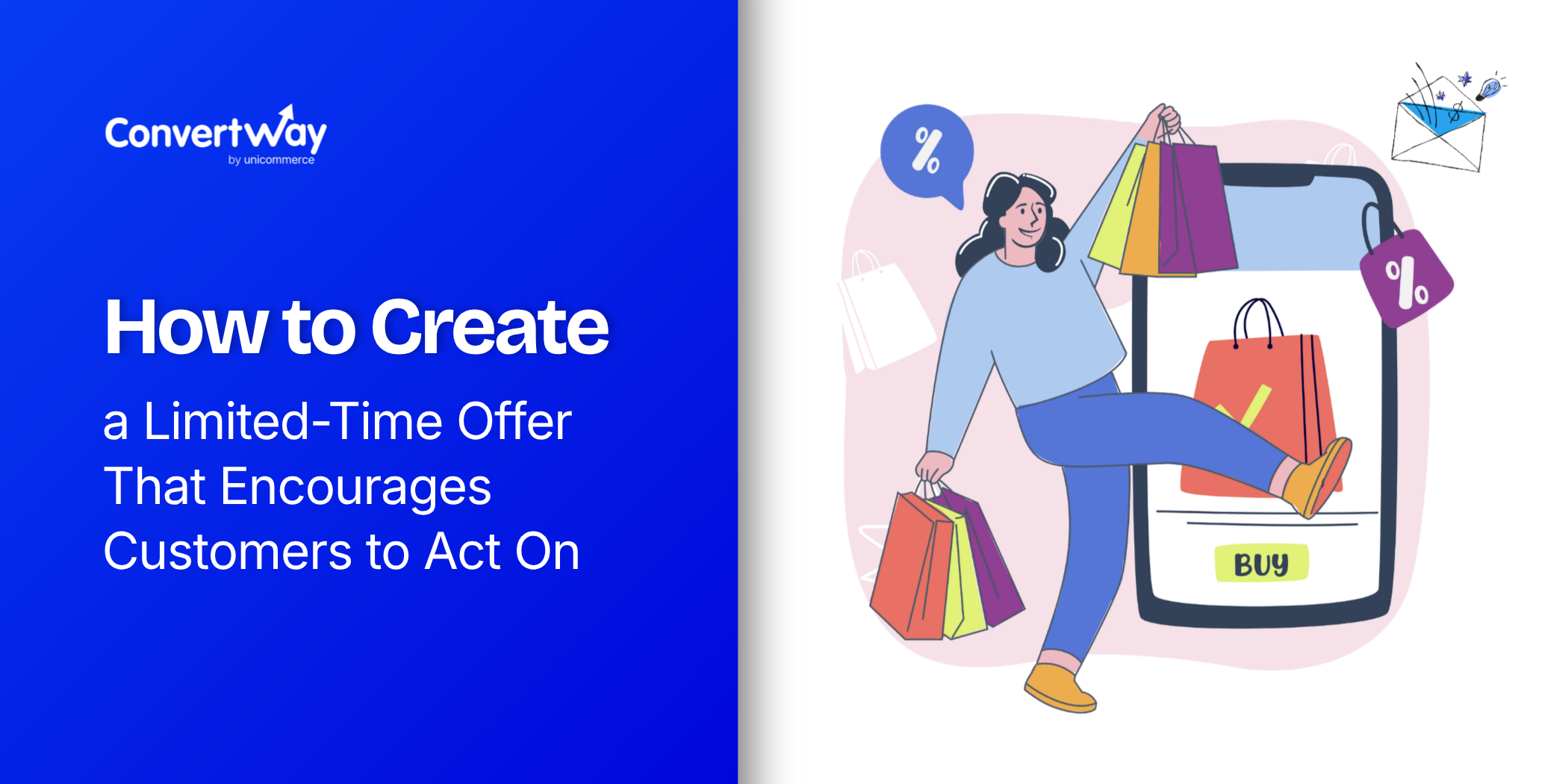
Some offers make us buy a product. This is not just a statement; it's a fact. Think of your own example. A sale is about to end in the next two hours, and you weren't planning to buy anything. But then you see something you actually need for your wardrobe at 60% off. Now the brand is telling you, "Buy it now because this deal won't be available tomorrow." And you end up buying the product.
Yes, that's exactly the kind of offer we're talking about. It's called a limited time deal, and it's designed to create urgency and move customers from "I'll think about it" to "I'll buy it now."
However, offering such deals requires proper marketing planning, and most brands make mistakes here. This blog covers both: how to create a limited time offer that actually works and how to use different marketing channels to promote it effectively.
Before getting into how to create a limited time promotion, it helps to understand why these offers work so well.
The answer comes down to human psychology. Limited time offers create urgency and trigger the fear of missing out (FOMO). When people know an offer will disappear soon, they are less likely to postpone the decision.
Here is what a well-timed limited-time offer can do for your brand:
Many first-time buyers hesitate before placing their first order. A meaningful discount with a clear end date gives them an extra reason to try your brand instead of waiting or buying from a competitor.
Sometimes customers are already interested but leave without completing the purchase. A limited-period offer can be the final push they need to return and finish the checkout.
Exclusive offers available for a limited period make existing customers feel valued. They are more likely to make another purchase and continue choosing your brand over others.
Whether you want to sell slow-moving products or clear seasonal inventory, a limited-time offer gives customers a strong reason to buy now instead of waiting for another sale.
The keyword in all of this is well-timed. A limited-time promotion that nobody sees, or that reaches the wrong person at the wrong moment, does not do any of these things. That is where the channel strategy matters. But before sending, you should check out the types of limited-time offers you can create.
In limited-time offers, different formats work for different goals, and choosing the right one determines how effective your campaign will be.
So, here are the types of limited-time offers you can run:
A flash sale runs for a very short window, usually 4 to 12 hours, sometimes even less. The short deadline makes it more powerful as it creates a spike of urgency that gets customers to act immediately.
Flash sales work best mid-week, typically Tuesday through Thursday, when customers are more likely to be actively browsing and making decisions. They are ideal for moving high-demand products quickly, generating a burst of revenue, or re-engaging customers who have gone quiet.
Best for: Quick revenue spikes, clearing inventory, re-engagement campaigns.
This is a percentage or flat discount that runs for a set number of days. Unlike a flash sale, it gives customers a slightly longer window to decide, which works better for higher-consideration purchases.
The key is to keep the end date visible and specific. "20% off - ends Sunday at midnight" performs better than "20% off for a limited time" because the customer knows exactly how long they have.
Best for: Seasonal campaigns, new product launches, site-wide promotions.
Studies show that 82% of online shoppers are more likely to buy when free shipping is available. Putting a deadline on it, like "free shipping today only", turns it from a perk into a trigger.
This works especially well as an exit-intent offer for customers who are about to leave without buying. The limited-period offer feels like a bonus rather than a discount, which makes it easier to maintain your brand's perceived value.
Best for: Reducing cart abandonment, increasing average order value with a threshold, and new customer acquisition.
A BOGO offer (buy one, get one free) works well because they instantly feel like high value. Customers feel like they are getting more for what they pay, which makes the decision easier.
Best for: High-margin products, category promotions, driving volume.
Instead of reducing the price, you can add a free gift when customers cross a certain order value within a limited time. This keeps your pricing intact while still giving customers a reason to buy now.
Best for: Premium brands that want to maintain price integrity and upselling to a higher cart value.
Sales around events like Diwali, Eid, Holi, Valentine’s Day, or Raksha Bandhan come with built-in urgency. These limited-time offer templates also work because they connect with customer emotions and buying behavior during specific times of the year.
Seasonal campaigns also benefit from the emotional context of the moment, which makes customers more receptive to offers.
Best for: Annual campaign calendar, brand visibility, category-wide promotions.
These types of campaigns come with specific words that act almost like triggers in your messaging. They shape how customers perceive urgency and make the offer feel real in the moment.
The way you communicate it matters just as much, sometimes even more. So, there are two types of messaging that consistently drive action
Time-based phrases tell customers exactly how long they have:
Scarcity-based phrases create pressure by showing limited availability:
When used correctly, these two work even better together. One limited time offer template tells customers time is running out, the other tells them stock is running out. And when both are true in the customer’s mind, the decision becomes much faster.
One important rule: If you say the offer ends at midnight, it should actually end at midnight. Customers notice when “limited-time” offers quietly continue beyond the deadline. And once that trust is broken, it is very hard to bring back.
Now that we understand what makes these messages work, the next step is to see how brands actually use these offers across different channels to drive results.
If you want limited-time offers to actually work, you need to treat each channel differently. Each one plays a different role in how customers see and respond to your offer.
Here is how to think about each channel and how to use it properly.
SMS is the fastest channel you have. It reaches customers directly on their phones, and the open rate is much higher than most other channels. That makes it perfect for time-sensitive offers where timing matters more than explanation. A flash sale that starts at 10 AM should reach customers just before it begins. A deal ending today should be sent when customers are most likely to act, not hours before they are ready to buy.
For instance: “Your 4-hour flash sale starts NOW. 30% off sitewide - ends at 2 PM today. Shop here: [link]”.
Segmenting your SMS list matters here. Loyal customers should get higher-value offers, while new or inactive users can be nudged with first-purchase incentives. The more relevant the message, the better it performs.
WhatsApp sits between SMS and a personalised conversation. Customers who opt in usually already trust the brand, which makes it a strong channel for exclusive or limited-period offers.
This channel works well for:
Email is where you can give the offer more context and build it properly. For a limited-time offer template, the most important element in an email is a countdown timer. A live timer inside the email that shows exactly how many hours and minutes are left creates urgency in real time, and it performs significantly better than just writing "ends Sunday."
But you have to write a good subject line, which should contain a good urgency message. You can write:
The structure of the email should make the offer and deadline visible immediately, without forcing the customer to scroll. Put the CTA button high up in the email. And if you have a customer who opened the first email but did not click, send a follow-up reminder a few hours before the offer expires.
Push notifications are best for reaching customers who already use your app or are browsing your site. They appear instantly on the screen, which makes them hard to miss.
For limited-time offers, push notifications work well for:
Keep push copy even shorter than SMS. One clear line that tells them what the deal is and that it is ending soon is enough.
To make this easier to understand, let us look at it in a more practical way. Instead of thinking about each channel separately, think about how they work together in a single campaign.
Below is a simple example of how a multi-channel limited-time promotion plan actually comes together in real life.
Let us say you are running a 48-hour limited-period sale. Here is how a multi-channel promotion plan looks in practice:
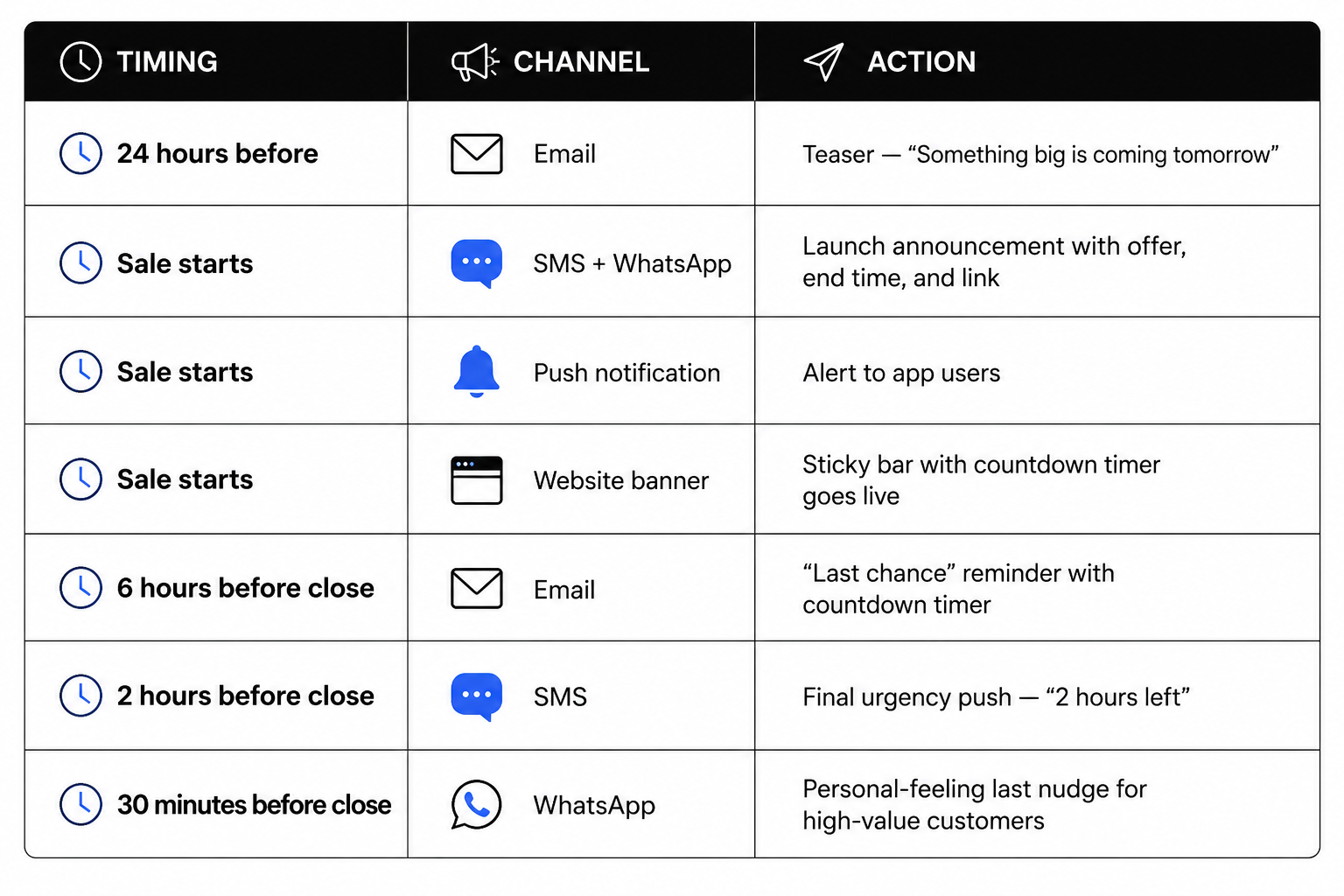
Each channel plays a specific role. Email builds awareness and context. SMS and WhatsApp drive immediate action. Push notifications catch active users at the moment. And, when these channels work together, the campaign is much stronger than any single channel running alone.
But running a limited-time deal campaign across multiple channels can be a little confusing, and you need a single platform that handles it all together. This is where Convertway’s marketing automation tool comes in. See why in the next section.
Convertway is an omnichannel marketing automation platform built specifically for D2C and ecommerce brands. It brings SMS, WhatsApp, email, and push notifications into one place, so you can plan, execute, and track your entire limited-time offer campaign from a single dashboard.
Here is what Convertway helps you do:
Whether you are running a 4-hour flash sale or a 7-day seasonal campaign, Convertway gives you the infrastructure to promote it properly across every channel your customers are on, at exactly the right moment.
A limited-time offer is one of the most powerful tools in ecommerce marketing. But it only works when customers see it, understand it, and can act on it quickly.
That means getting both parts right, like the offer itself (type, message, deadline) and the promotion (channels, timing, and segmentation). When both work together, limited-time offers bring in new customers, recover abandoned carts, and reward loyal buyers.
Start with one offer, choose the right type, and promote it through the right channels to the right audience.
FAQs
1. What is a limited-time offer?
A limited-time offer is a discount, deal, or incentive available only for a set period of time like, a few hours, a day, or a week. The expiry creates urgency and encourages customers to act quickly instead of waiting.
2. What types of limited-time offers work best?
It depends on your goal. Flash sales work best for quick revenue spikes. Free shipping works well for cart recovery. BOGO and free gifts work well for maintaining pricing while increasing value. Seasonal campaigns help build awareness during high-intent periods.
3. How long should a limited-time offer last?
Flash sales usually last 4 to 12 hours for maximum urgency. Broader campaigns like seasonal offers can run for 48 to 72 hours. Shorter durations create more urgency, but you still need enough time to promote them properly.
4. Which channel is best for promoting a limited-time offer?
There is no single best channel. SMS works best for speed, WhatsApp for personalised communication, email for detailed storytelling, and push notifications for real-time reach. The best results come when these channels work together.
5. How do I write a good limited-time offer message?
Be clear and direct. State the offer, mention the deadline clearly, and give one simple action. For example: “30% off everything - ends tonight at midnight. Shop now: [link].”
6. How do I make sure my limited-time offer does not feel fake?
Be consistent with your deadlines. If you say the offer ends at midnight, it should actually end at midnight. Repeatedly extending offers reduces trust and weakens future urgency.