Text marketing is one of the most popular channels for businesses and delivers some of the highest open rates. But simply growing your SMS subscriber list can also increase your budget without adding real revenue, especially if your messages fail to interest or engage customers and SMS opt-outs start climbing.
An SMS opt-out usually happens when a customer becomes frustrated or stops finding value in what you are sending. But why does it happen suddenly? It could be your timing, content, frequency, or the overall experience of your messages that is no longer working for them.
Because getting people to subscribe is only half the job. Keeping them subscribed is where long-term SMS success truly happens. So, what’s the solution, and how do you keep customers engaged over time? Stay with us till the end.
In this blog, we’ll cover:
SMS opt-outs happen when a subscriber chooses to stop receiving text messages from your brand. In most cases, this is done by replying with keywords like STOP, UNSUBSCRIBE, CANCEL, END, or QUIT. Once received, compliant messaging systems automatically remove that number from future promotional campaigns.
Opt-outs are a normal part of text message marketing. However, when opt-outs begin increasing consistently or spike after specific campaigns, they often signal a deeper issue in your messaging strategy.
But how will you find out how many customers are unsubscribing? There are two ways to identify SMS opt-out problems:
This shows how a specific SMS campaign performed.
What It Tells You:
For instance, you send 10,000 texts and 180 people unsubscribe. (180 ÷ 10,000) × 100 = 1.8% campaign opt-out rate, which means that the campaign may need review.
This measures how many subscribers your list loses over a full month.
What It Tells You:
For instance, you have 25,000 active subscribers and lose 500 in one month. (500 ÷ 25,000) × 100 = 2% monthly list churn, which means your retention strategy needs attention.
If this is happening, there can be several reasons behind it. Let’s look at the key factors causing SMS opt-outs in the next section.
People rarely opt out for no reason. Usually, something in the experience pushed them to hit STOP.
Here are the most common causes:
If you move from one text a week to one every day, your brand quickly becomes noise. Instead of creating excitement, frequent texts can cause fatigue and push customers to opt out just to reduce distractions.
Generic promotions like “Check out our sale” do not give subscribers a reason to stay. Customers expect useful offers, exclusive deals, reminders, or relevant updates when they share their phone number.
If someone subscribed months ago and hears from you suddenly, they may not remember opting in. Without context, your message can feel unexpected or even spammy.
Late-night or badly timed texts feel intrusive. Even a good offer may create frustration if it arrives while someone is sleeping, working, or busy.
Mass texts with no relevance, personalization, or context are easier to ignore and unsubscribe from. Customers respond better when messages reflect their interests, purchase history, or location.
But the good news is that all of these issues are fixable. With the right strategy, proper timing, and message content that truly makes sense to customers, you can reduce opt-outs and improve engagement. So, what are those solutions? Let’s explore them below.
Text marketing offers strong ROI, wide reach, and flexible ways to connect with customers. From promotions and order updates to reminders and personalized offers, it gives businesses many opportunities to drive engagement and revenue. But these benefits only last when subscribers willingly stay opted in and continue finding value in your messages.
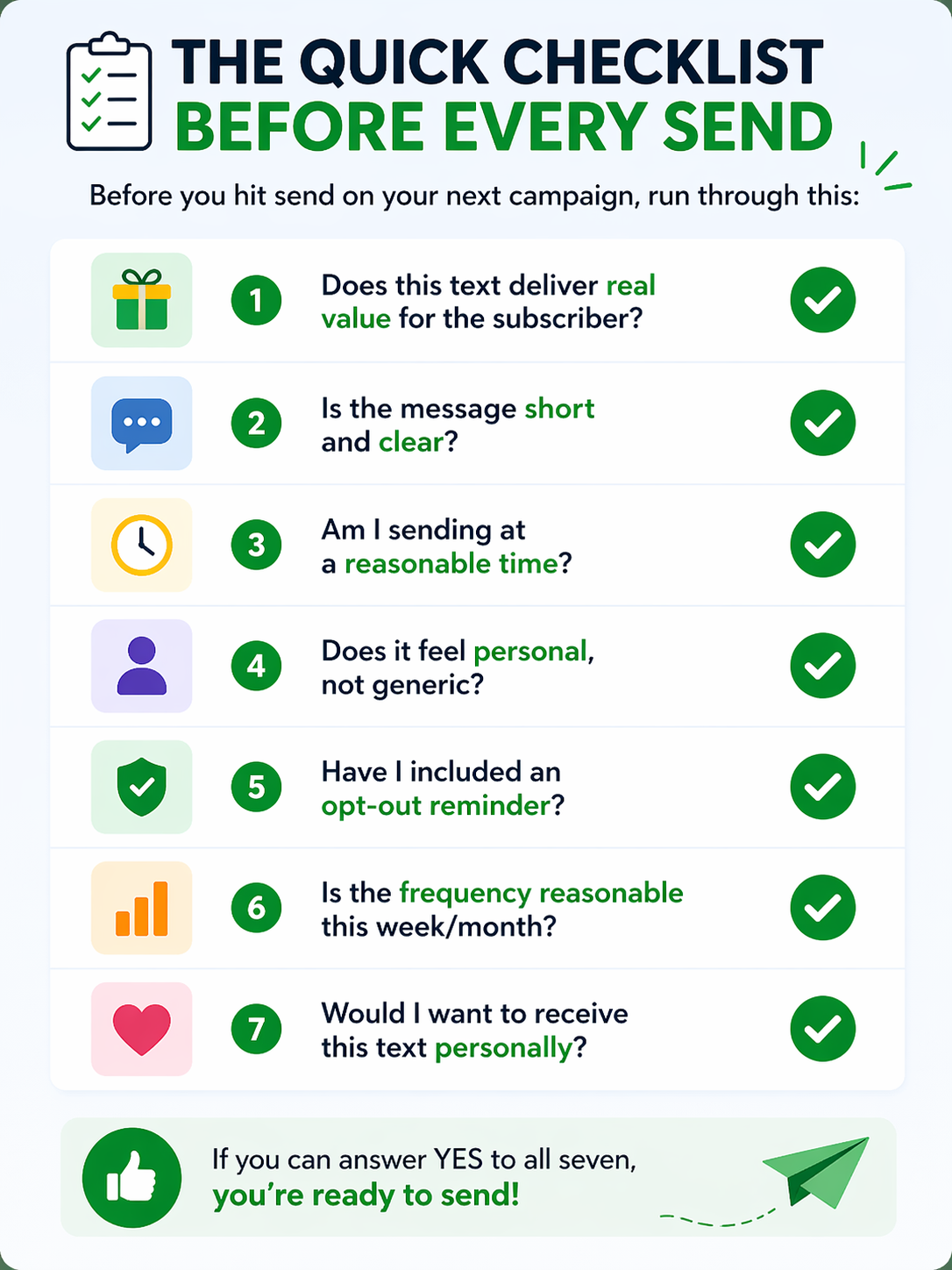
That is why reducing opt-outs should be a key part of every text strategy. When your messages are relevant, timely, and useful, customers are far more likely to stay subscribed and interact with your brand.
So, here are 8 ways to improve your messages and get the most out of your text marketing efforts:
Think about why you personally stay subscribed to any brand's texts. It's probably because they give you something genuinely useful, early access, exclusive discounts, and time-sensitive alerts you'd actually miss if they stopped. That's the bar you're chasing.
Some ways to deliver consistent value:
If you're running a campaign and need to send multiple messages, make sure to space them out. Give your subscribers breathing room instead of overwhelming them with constant texts.
A good rule of thumb for most brands is to send no more than 4–6 messages per month, depending on your industry and audience expectations. In most cases, one well-timed, high-value text each week performs far better than a mediocre message every day.
Think about getting a text that says: "Hey Sarah, your favourite sneakers just restocked in your size, and they're 20% off today only."
Now, imagine getting “Hi! Check out our new arrivals."
Which one are you responding to? So, Personalization in text marketing starts with using the subscriber's first name. But it can go much deeper:
Nobody subscribed to read an essay. SMS is a short-form channel, so it should be treated that way. The most effective text messages are simple, direct, and easy to act on. The ideal Text message includes one clear message, one clear action, and one clear benefit, nothing more.
A good example would be: “Flash Sale Live: 40% off everything. Ends midnight. Shop now: [link].”
Timing matters more in SMS than almost any other channel, because texts feel more personal and immediate.
Some proven guidelines:
Many brands use SMS only to broadcast messages, but better results come from two-way communication. Reply to customer texts, answer simple questions, and resolve concerns quickly.
For instance, a customer replies, “Can I change my delivery address?” and receives an auto-response like, “Yes, please share your order ID, and our team will assist you shortly.” This is how brands lower opt-out rates and build stronger relationships through conversation.
Your welcome message is one of the most important texts you'll ever send. Most brands use it to dump a discount code and move on. That's a mistake.
A great welcome text does three things:
Subscribers stay engaged when they feel they’re getting something valuable in return for staying on your list.
For example, you can offer:
When every message adds value, customers are far more likely to stay subscribed and less likely to opt out.
Even with the best practices in place, you won’t know what’s truly working unless you keep a close eye on your performance. So, check out the matrix given below for your growth.
If you’re not tracking the right numbers, you’re basically guessing what’s working and what’s not. These metrics help you understand how your Text strategy is performing and where customers are dropping off.
Make it a habit to review these numbers after every major campaign, not just at the end of the month or quarter.
If you want to make this process easier and more structured, the right SMS platform can help you track and manage these metrics in one place.
One such platform is Convertway, which many brands already use to streamline their Text marketing efforts. But what makes it stand out? Let’s take a look.
Once you start tracking text message marketing performance, having the right system makes it much easier to manage campaigns effectively. Platforms like Convertway help brands go beyond just sending messages and focus on engagement, performance, and retention in a structured way.
Instead of juggling multiple tools, Convertway brings everything, campaigns, automation, and analytics, into one place so brands can stay consistent and data-driven.
Here’s what it helps you with:
In simple terms, Convertway helps brands move from basic SMS sending to smarter, more effective campaign management that improves engagement and retention.
At the end of the day, text message marketing only works when people actually want to hear from you. It’s about sending messages that feel useful, timely, and worth reading. That’s what keeps people subscribed and engaged.
Most opt-outs build up over time when messages feel irrelevant, too frequent, or just don’t add value anymore. The good thing is, this is all fixable with the right approach. Small changes in how you communicate can make a big difference in how long customers stay with you.
When you stay consistent with value, respect your audience’s attention, and keep improving based on what the data is telling you, SMS marketing becomes a channel people actually trust.
FAQs:
1. What is text message marketing?
Text message marketing is a strategy where businesses send promotional or transactional messages to customers through SMS to drive engagement, sales, and updates.
2. Why is text marketing important for businesses?
Text marketing is important because it has high open rates, instant delivery, and helps businesses directly reach customers with timely and relevant updates.
3. Why do people unsubscribe from text message marketing?
People unsubscribe when text marketing messages are too frequent, irrelevant, poorly timed, or do not provide meaningful value.
4. How can I improve results in text marketing?
You can improve text marketing results by personalizing messages, reducing frequency, sending valuable offers, and improving timing.
5. What is a good opt-out rate in text message marketing?
A healthy text message marketing opt-out rate is usually below 2–3% per campaign. Higher rates may indicate poor engagement or targeting issues.
6. How do I track performance in text marketing campaigns?
You can track text marketing performance using metrics like opt-out rate, engagement rate, clicks, and monthly subscriber churn.
7. What is the best tool to reduce SMS opt-outs in text marketing?
The best SMS marketing tools, like Convertway, help reduce opt-outs by improving message timing, personalization, automation, and engagement tracking, so brands can send more relevant and value-driven texts.