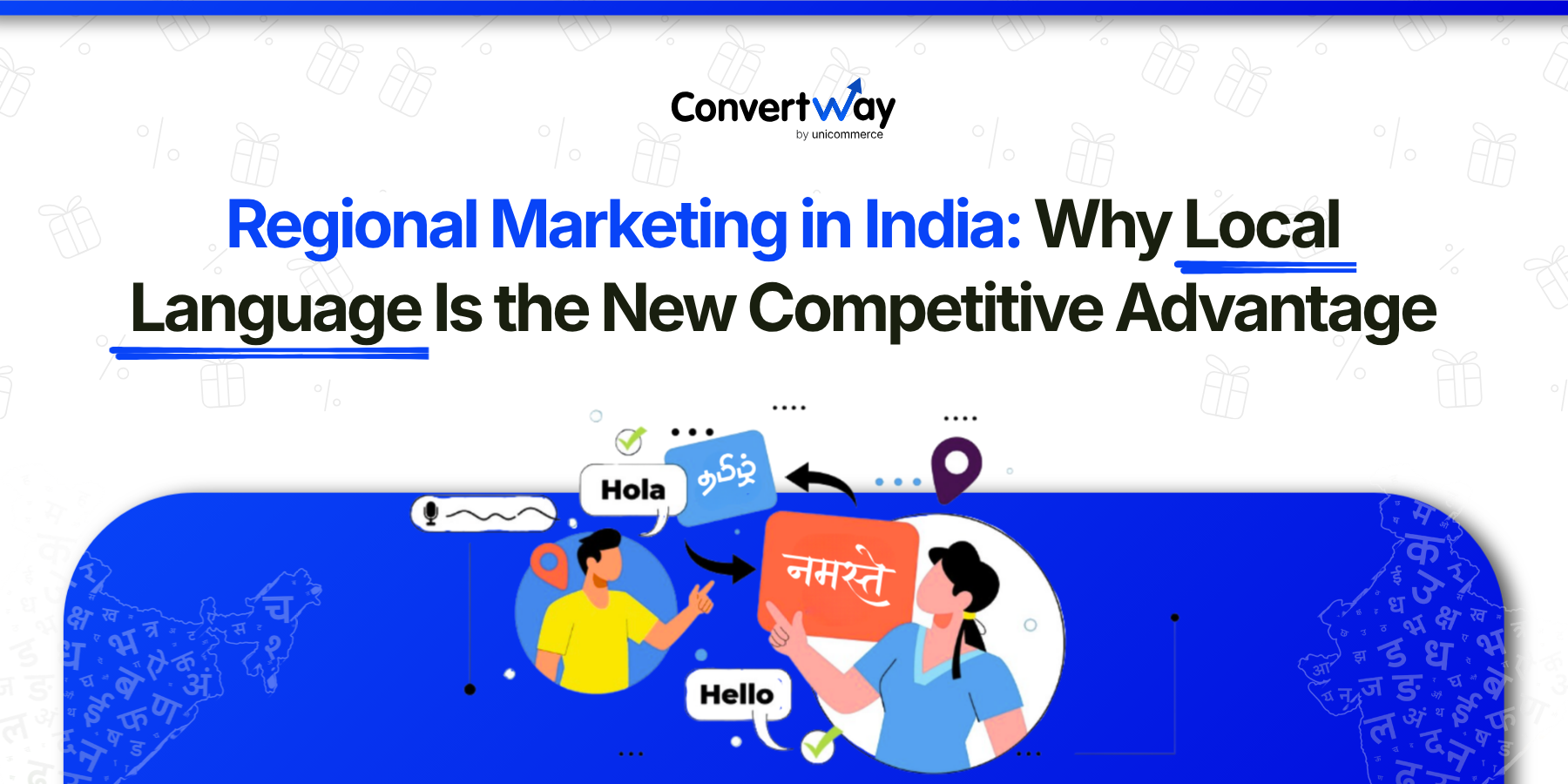
India has over 1.4 billion people, 22 official languages, and hundreds of dialects. And if your brand is only speaking in English, you're only talking to a fraction of India.
The reality is simple: the next wave of internet users in India does not think in English first. They search, shop, scroll, and make buying decisions in languages they use every day, including Hindi, Tamil, Telugu, Marathi, Gujarati, Bengali, and many more.
People trust what feels familiar. They engage more with content they understand instantly. And they are more likely to buy when a brand speaks their language naturally.
And here it has become one of the biggest growth opportunities for brands that want to connect with Indian consumers at scale.
So, what does regional marketing really mean, why does it work so well, and how can your brand use it effectively? Let’s break it down.
Regional marketing, also called vernacular marketing, is the practice of creating content, ads, and campaigns in the language your audience actually uses in everyday life, instead of relying only on English or Hindi.
But here’s an important point: it is not just translation.
Good regional marketing is about sounding natural, familiar, and local to the audience you are trying to reach. That means understanding how people speak in different regions, including the tone they use, the phrases they relate to, and even the cultural references that make them stop and pay attention. Humour, festivals, habits, and everyday expressions all matter here.
Understand this with an example: A campaign that connects well in Punjab might not feel the same in Tamil Nadu, even if the message is technically correct in both places. Because what feels “real” and relatable changes from region to region.
These are all theories, but the real reason it works becomes clear when you look at what’s actually happening on the ground.
The shift is happening across smaller cities and towns where regional languages are the default way of communication. And that changes everything for brands.
So, here’s why Vernacular marketing works so well in India:
Most of India does not think in English in their daily lives. And as internet access expands deeper into Tier 2, Tier 3, and rural areas, the next wave of users is coming online with regional languages as their first choice.
This means the internet in India is becoming less English-first and more language-diverse every year.
When content is in a language people naturally understand, they don’t need to translate it in their head. That small difference leads to much stronger engagement.
That’s why performance improves naturally:
Language is deeply emotional. It is one of the fastest ways to build familiarity with a user. When a brand speaks in the customer’s own language, it feels less like advertising and more like communication.
Regional language audiences are still relatively under-targeted, which creates efficiency benefits for brands.
When you connect all of this, like where users are coming from, how they consume content, how trust is formed, and how campaigns perform, one thing becomes clear: language is shaping how growth actually happens in India.
And to understand the scale of this shift, the numbers below make it even more obvious:
These numbers clearly back the shift, and they reflect what customers are actually choosing today. But the real question is not whether this trend exists. The real question is: does your brand actually need to act on it?
To understand that, let’s go a step further.
Regional marketing is already being used by some of the biggest brands across industries, and the results clearly show why it works.
So, which industries are already using regional marketing and seeing real wins? Let’s break it down below:
Brands like Flipkart and Amazon have run festive campaigns in Hindi, Tamil, and Bengali that feel like a natural part of the celebration. The result is higher click-through rates and better conversions during peak seasons like Diwali, Eid, and Onam.
D2C brands targeting Bharat customers are seeing the biggest lift because their products are often for everyday use, and nothing feels more relatable than a message in your mother tongue.
Byju's introduced vernacular learning modules specifically to penetrate regional markets in South India. The result was higher user retention because learners could engage with content in the language they think in.
Fortune's regional campaigns are a great example of this done right. By celebrating regional food pride and communicating in the language of the local market, the brand built stronger loyalty in Tier 2 and Tier 3 cities than any national campaign could have achieved.
And once you see where it’s already working, the next question naturally becomes, what does this actually look like when brands put it into action?
You don’t have to overhaul your entire marketing strategy overnight. Most brands start small, test what works, and then gradually scale regional marketing across channels.
Here’s what vernacular marketing actually looks like in real practice:
Brands use regional language messaging for high-intent moments like offers, cart recovery, and order updates.
Result: higher open rates and faster responses
Voice search in India is growing fast. Over 50% of Indian internet users are projected to regularly use voice commands by 2026. You can localise key pages and keywords so users can find them in their own language, such as:
Result: more organic traffic from Tier 2 and Tier 3 users
Instead of one English post for everyone, you can create content in different languages, like you can search influencer content creators in Tamil, Kannada, Marathi, and Bhojpuri. Also, you can:
Result: higher engagement because it feels relatable
You can scale it properly by using the same product, a different language, and tone.
Result: better clicks and stronger conversions
But, how do you actually build this in a way that works at scale? Because the goal is not just to experiment with regional marketing. The goal is to turn it into a system that consistently drives growth across different markets.
Here’s a practical framework to help you build that.
Getting started with regional marketing doesn’t have to feel complicated. You don’t need to do everything at once. You just need a clear system that you can build on step by step.
Here’s a practical way to build a local strategy that scales:
Check where your orders are already coming from and where users are dropping off. If you’re already seeing demand from places like Maharashtra, Gujarat, Tamil Nadu, or Karnataka, those are your easiest starting points. Focus there first instead of trying to cover everything.
Not every channel works the same way in every region, so it’s important to keep it simple and practical.
Start with what your audience already uses daily.
Once you know your regions, don’t treat all users the same.
Use simple signals like location, purchase history, and preferences to group users, and then talk to them in a way that feels relevant.
Most brands think regional marketing means extra manual work. It doesn’t have to. You just need the right setup once, and then let it run.
Tools like Convertway help you automate regional messaging at scale, so you can:
So instead of doing more work, you’re just setting up a smarter system.
Once campaigns are live, don’t just leave them running blindly. Keep checking what’s working and what’s not.
So it simply means: the brands that win will be the ones that speak Bharat’s language.
India’s next wave of customers is coming from cities like Patna, Surat, Nagpur, and Coimbatore. And they will choose brands that speak to them in their own language.
Regional language marketing is now the new default for growth in India. Brands already using regional WhatsApp campaigns, local content, and vernacular ads are building a clear edge.
The question isn’t whether to start. It’s how fast you can.
After everything we’ve seen, one thing is clear: regional marketing is how brands naturally connect with customers in India.
And the easiest place to start is SMS and WhatsApp. Your customers are already there, and the only change is speaking to them in a language and tone that feels familiar.
Tools like Convertway make this simple by helping Shopify brands automate multilingual campaigns for cart recovery, repeat purchases, and offers, because in India, the brands that feel local are the ones that win.
Ready to run your first regional language campaign? Start with Convertway, and see the difference a message in the right language can make.
FAQs
1. What is regional marketing in India?
Regional marketing is the practice of creating content, ads, and campaigns in local Indian languages like Hindi, Tamil, Telugu, Marathi, and Bengali instead of only English. It helps brands connect better with non-English-speaking audiences across India.
2. Why is vernacular marketing important for Indian brands?
Vernacular marketing is important because most new internet users in India prefer regional languages. It improves trust, engagement, and conversions by making content easier to understand and more relatable.
3. How does regional language marketing improve conversions?
Regional language marketing reduces friction in communication. When users understand content instantly in their own language, they engage more, trust more, and are more likely to complete a purchase.
4. Which industries benefit the most from vernacular marketing?
Industries like eCommerce, D2C, EdTech, FMCG, and retail benefit the most because they directly target mass audiences across Tier 2 and Tier 3 cities where regional languages dominate.
5. What is a local content strategy in digital marketing?
A local content strategy is a marketing approach where brands create and distribute content based on regional languages, culture, and user behaviour to improve engagement in specific geographic markets.
6. How can brands start with vernacular marketing?
Brands can start by localising SMS and WhatsApp campaigns, optimising SEO for regional keywords, creating regional social media content, and using automation tools to scale personalised messaging.
7. Does regional marketing help with SEO in India?
Yes. Regional SEO helps brands rank for vernacular search queries and voice searches, which are growing rapidly in India, especially among Tier 2 and Tier 3 users who search in their native language.